You may have met, seen, read about, or watched her on the news.
Who is she?
She is the university’s new president, the leader of an Ivy League university, or even the top candidate for the U.S. presidency. She’s the first or one of the few women to hold the post. She’s coming in as the organization says it is committed to making the changes necessary for mid-21st-century success. She has worked hard to get here, having broken through the glass ceiling. Now, she’s atop what turns out to be a troubled institution. She is falling, not from grace, but from a glass cliff where there’s no parachute.
What has she ascended and where does it land her?
She has fully ascended the career ladder and broken through the glass ceiling. Now, she has inadvertently landed on a “glass cliff”. This means she has been appointed to a senior role during a period of crisis or of poor organizational performance, thereby increasing her chance of failure. Having spent extraordinary time and energy to the top, she is now reluctant to refuse the position or its tasks “lest she be accused of ‘looking a gift horse in the mouth.’” As she takes the helm, she is handed a poisoned chalice — charged with solving, often without the necessary support, problems that took her predecessors years to create. If she cannot solve them quickly enough, “her” failures are disconnected from the impossible task she was handed at the outset. She is personally blamed.
And, blame is not the only thing she experiences. She is 45% more likely than her male counterpart to be ousted from her CEO role. If all of that doesn’t make the glass cliff problematic enough, after she is “pushed out as a CEO, she’s replaced by a man, a mark of a return to the status quo.” This final move in the scenario has been dubbed the “savior effect.”
Five ways to avoid or (if already there) get traction on the cliff
1. Assess the university’s finances and the culture
Throughout the search process, gather meticulous data on the university’s financial state. Once you are a finalist, ask for reports such as the audited financials and any letters to management; the statements of activities, financial position, and cash flow; and summaries of current and anticipated legal or major personnel issues. Also do your best to get a handle on the current culture and ethos of the place.
2. Discern board commitment and competency for innovative, underrepresented leaders
A well-intentioned but inexperienced board can create a glass cliff without even knowing it. Current and former CEOs of nonprofit organizations, like Mojdeh Cox, express this point clearly: “Building infrastructure for marginalized leaders is a [board] responsibility. If we don’t want to continue harming organizations at a high level and severing ties in the community, we’ve got to provide support and really mean it…[my former organization] didn’t build the infrastructure for my leadership and we had a board that didn’t know what their job was.”
With this warning in mind, incoming and sitting female executives should research each board member to see what set of skills and experiences they bring to the table. How many of them have led people, projects, or initiatives that are similar to those you will lead? Ideally, Glass Cliff awareness programs are provided by industry experts before an executive search is even launched. If it doesn’t happen before the search process, aim to set up such a training once a new female or occupational leader takes the helm.
3. Propose goals and metrics in a “first-term success plan”
Before you agree to any specific goals and measurements use the information you have gathered from the research process described above to draft “a first-term success plan.” This plan should map out a few areas that data suggest need to be addressed over the next few years. It should also include the types of support you and your team will need to achieve time-specific, measurable goals in each of these areas. Set realistic, not idealistic deadlines since studies show that “when women are placed in precarious positions, they are given less time to turn things around than their male counterparts.”
4. Negotiate like a man
“Women are four times less likely to negotiate their salary than men.” Buck that trend and develop a negotiation mindset. Gather salary data from the 990s of peer institutions and present it during negotiations in cooperative but unapologetic ways. If you are going into a highly challenging environment, consider negotiating, on the front end, what a severance or buy-out package would look like. It’s easier to discuss such things when all is well than when things start to fail.
5. Set the net (the safety net)
Tap trusted colleagues to serve as an inner circle of advisers that you can use as a sounding board, a reality check, and a confidant. Relatedly, consider asking the board to include six to eight months of executive coaching. Prior to assuming the role, ask the board to approve any missing/vacant positions that are necessary for your success. It is better to get approval for key resources in anticipation of pressing needs rather than in reaction to an emerging problem.
Challenging but scalable
Hopefully, this article helps you avoid the glass cliff in the first instance. But, if you land there, summon the skills that have gotten you this far. Those skills plus the insights and assistance from others who have been there should help you gain traction and avert a fall.
Over the past year, I’ve had the privilege of collaborating with university leaders across the country—strategic thinkers and doers who are steering their institutions through today’s blustery headwinds. As these colleagues work to implement bold structural and cultural campus changes, they often ask a similar question:
“What can I, as a higher education leader, do to create meaningful change beyond my campus, especially at a time when the entire sector is at this pivotal crossroads?”
To answer that, I’ve started to assemble high-impact strategies that educational leaders can apply right now—on campus and beyond. Please join me in refining and building upon these and in sharing other actionable ideas.
1. Prioritize Inquiry Over Activism, Innovation Over Resistance
Why It Matters: In an era of polarized and clashing ideologies, universities must recommit to the pursuit of truth. In the academy, this pursuit must be driven by curiosity, intellectual risk-taking, and continuous learning rather than resistance for its own sake.
Actionable Tactics:
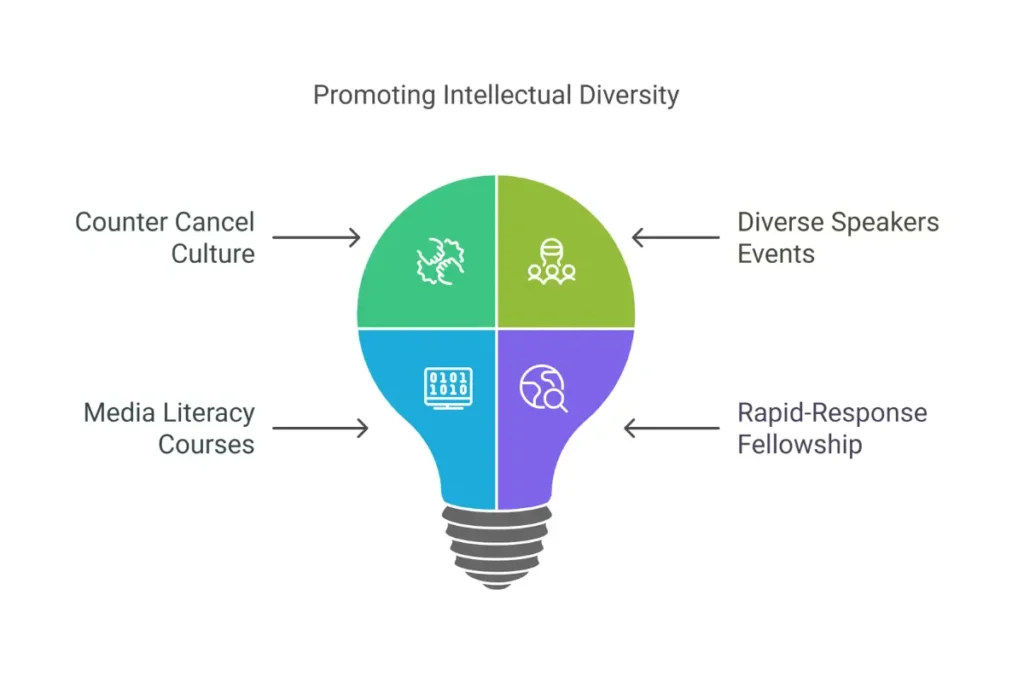
Foster environments that counter cancel culture and echo chambers by encouraging dialogue across differences.
Support events where students bring in intellectually diverse speakers to address the same topic.
Offer courses and workshops on media literacy, highlighting how algorithms shape and limit internet searches by using automated systems to present information that aligns with your past “platform behavior” (e.g., “likes,” saves, searches, etc.).
Launch a “Rapid-Response Fellowship” for scholars studying current political or cultural shifts in real-time.
2. Combat ‘Truth Decay’ with Evidence-Based Discourse
What It Is: Coined by RAND Corporation, “Truth Decay” refers to the present-day proclivities of giving opinions and personal experiences the same intellectual weight as facts. Such proclivities result in the rampant dissemination of misinformation and the public distrust of sources once known to be credible.
Why It Works: Rebuilding intellectual rigor starts with teaching how to differentiate evidence from opinion and combat disinformation.
Actionable Tactics:
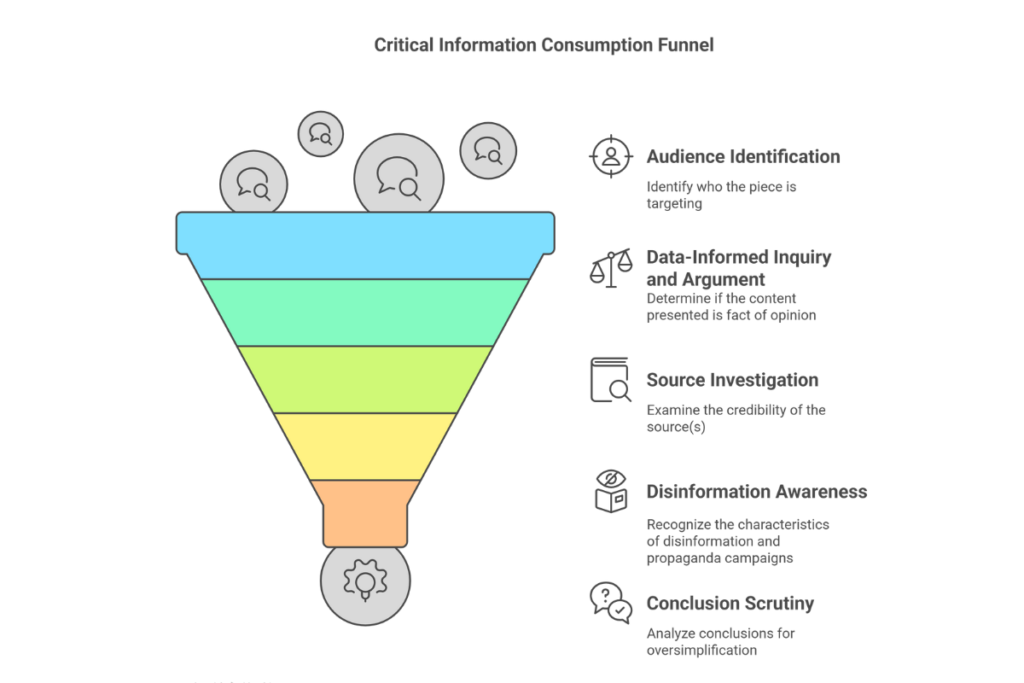
Be a highly discerning consumer of information and encourage others to be the same: investigate the source, identify the intended audience, look for and call out overly simplified conclusions and false dichotomies.
Model what data-informed inquiry and investigation looks like: seek out reliable information from experts, gather multiple perspectives, differentiate peer-reviewed sources from blogs.
Familiarize yourself and your students with known disinformation campaigns and look for the characteristics of such campaigns in information dissemination on new or less familiar topics.
3. Seek to Understand Not Persuade
Why It Works: In the highly polarized world in which we now live, people are primed to hold their ground and write off others who think differently. Knowing that inclination, you can disarm those with whom you disagree by showing them you sincerely want to hear about and learn from their perspective in an effort to better understand a divergent point of view.
Actionable Tactics:
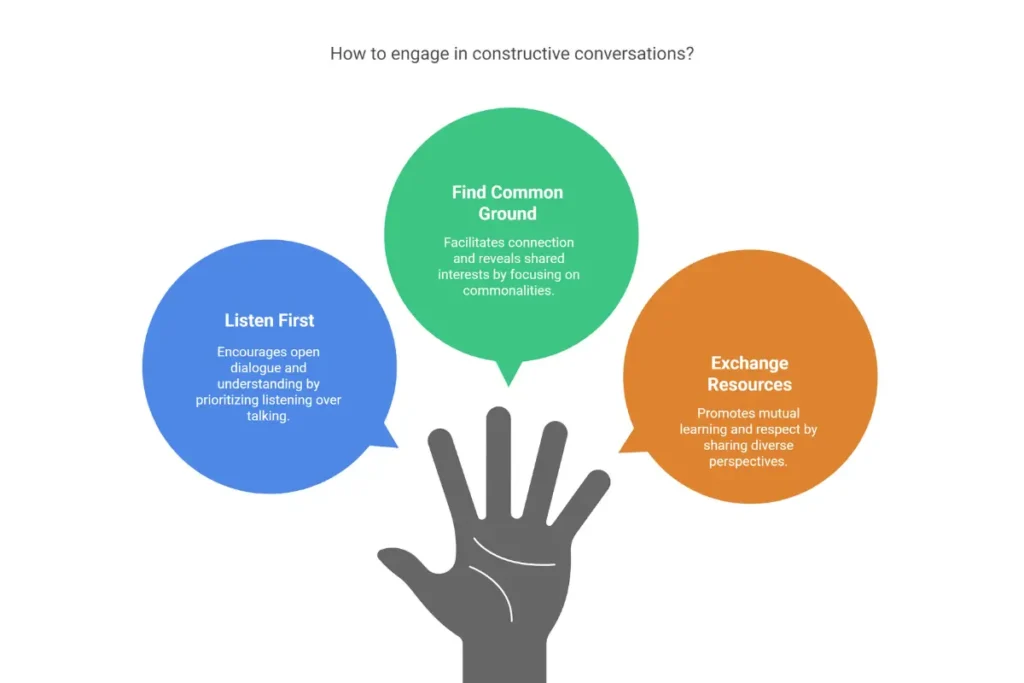
Listen first—Do more listening than talking as it keeps the doors to constructive conversation (Deep Listening) open.
Home in on whatever common ground emerges or can be built. Connecting with rather than correcting our ideological opponents puts us in a better place to see commonalities that are often obscured at first glance.
Exchange resources across perspectives: ask someone to share a go-to article and reciprocate.
Why It Works: Democracy must be practiced, not merely studied. Some of my writings show how service-learning and community-based research foster such practice.
Actionable Tactics:
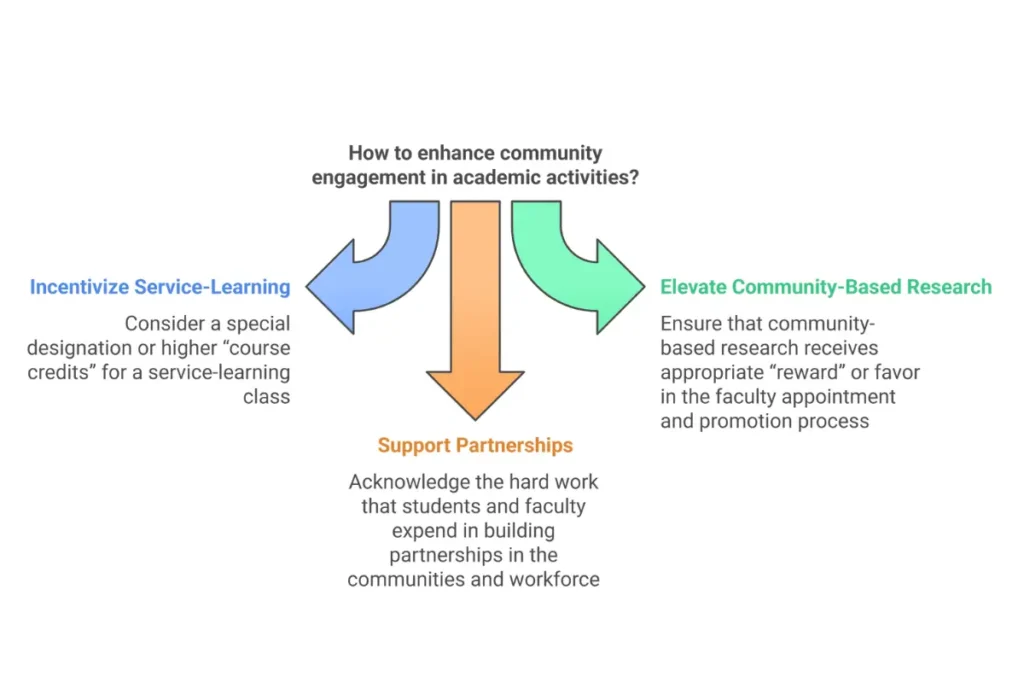
Incentivize service-learning projects in academic courses.
Reward community-based research in tenure or promotion processes.
Support university–community partnerships solving local challenges.
5. Elevate the Grassroot Efforts of Those Who Do their Homework
Why It Works: In academe, grassroots organizing is often viewed as empowering, authentic, and impactful. Providing appropriate resources and expertise to students, faculty, and staff who have spent time and energy researching the issues helps to reinforce the values of sharing reliable information and co-creating knowledge. This, in turn, builds internal solidarity.
Actionable Tactics:
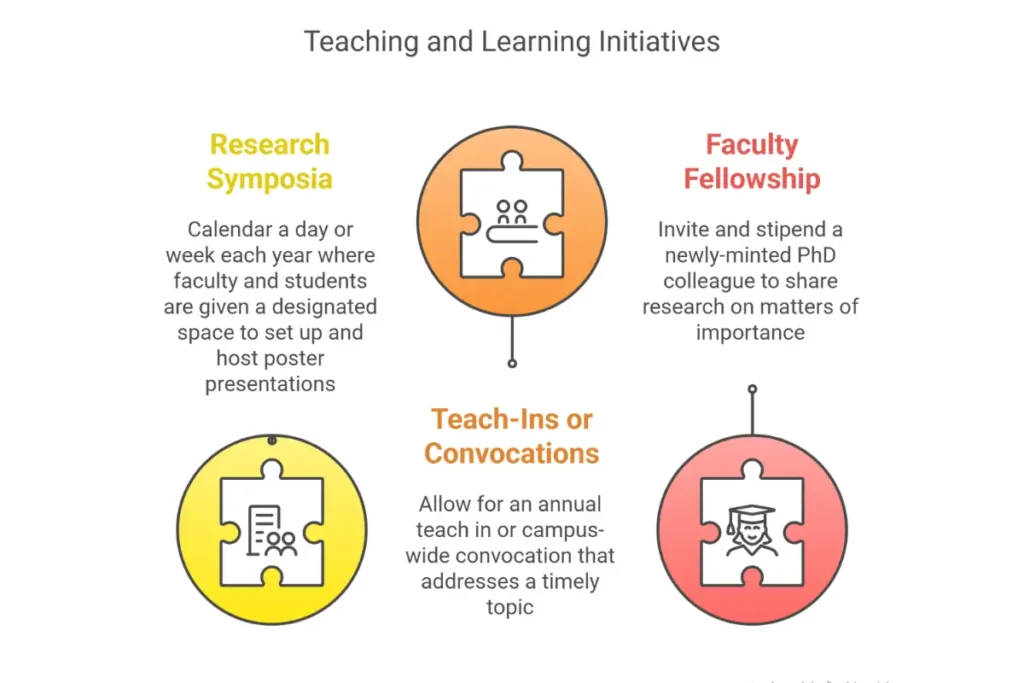
Host research symposia where students and faculty offer poster presentations related to enduring questions or urgent challenges.
Support student- and faculty-led symposia and teach-ins on timely topics such as immigration, tariffs and free market, community health.
Sponsor a research fellowship for a new PhD recipient who is studying the impact of federal policies on American higher education.
6. Streamline Decision-Making for Agility and Adaptability
Why It Works: To remain relevant, universities must act with urgency and flexibility. Neither bureaucracy nor the aim of complete unanimity should block innovation.
Actionable Tactics:
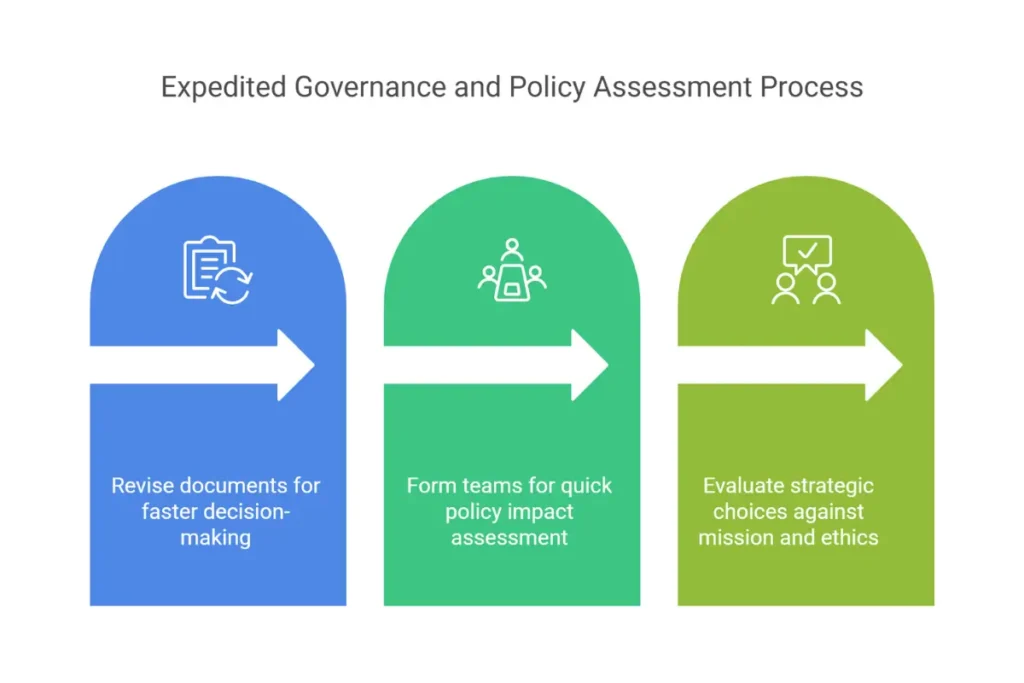
Update governance documents to allow for expedited responses.
Establish rapid-response teams to assess policy impacts within days.
Use Values Impact Assessments (VIAs) to ensure strategic choices align with mission, vision, and values.
7. Diversify and Sustain Funding Sources
Why It Works: Federal support for higher education is increasingly uncertain. Universities must build financial resilience through alternative revenue streams.
Actionable Tactics:
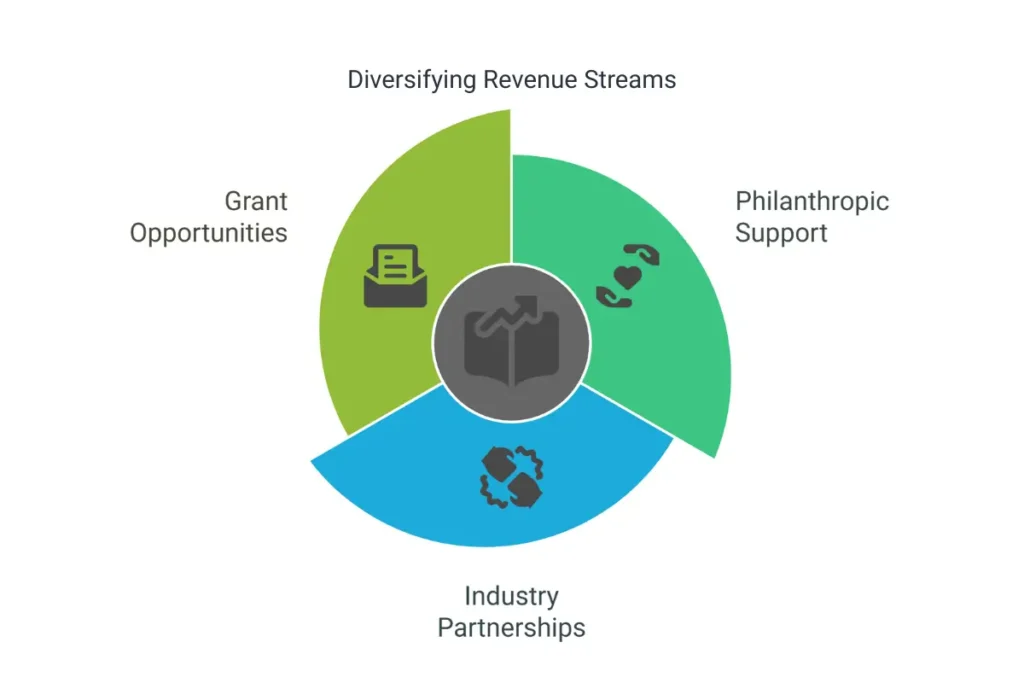
Cultivate philanthropic support for programs and services related to academic freedom, diversity, civic engagement, and the like.
Grow industry partnerships and contract research for mission‐aligned projects.
Why It Works: There is strength in numbers. By partnering with peer institutions, accreditors, state systems, and national associations (e.g., AAC&U, APLU, ACE, CIC, NAICU), an individual university can amplify its voice, share its resources, and brainstorm with others facing similar challenges.
Actionable Tactics:
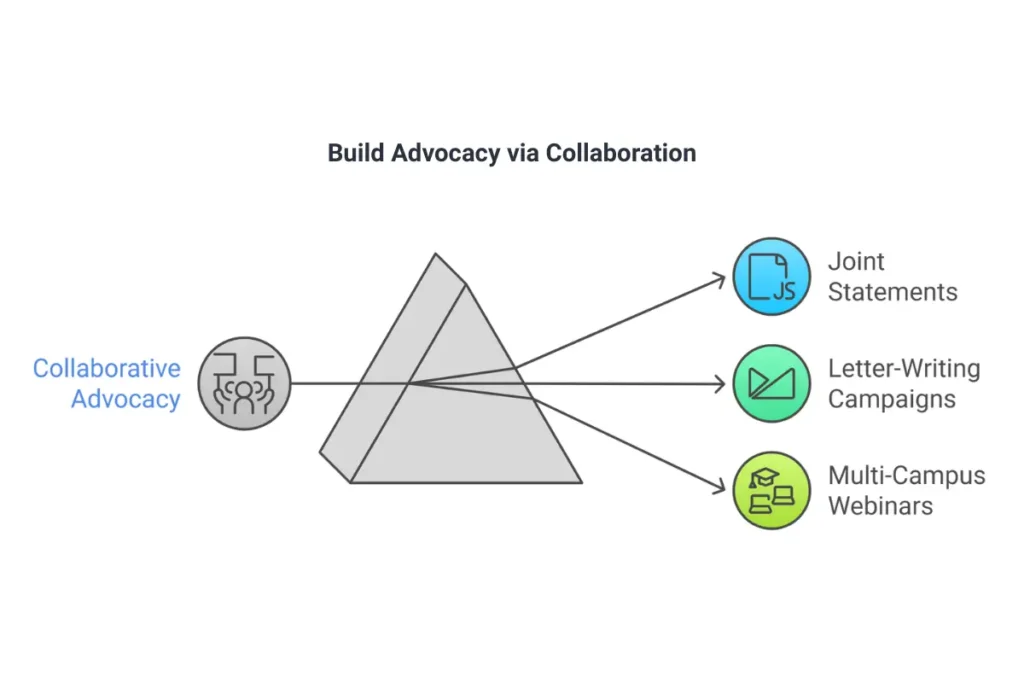
Issue joint statements defending academic freedom, free inquiry, diversity initiatives, or Title IX protections. Be prepared to actualize the commitments such statements endorse. This could mean giving the stage (literally) to thought leaders who represent opposing sides of complex and nuanced issues.
Coordinate multi-university letter‐writing campaigns to state and federal representatives.
Host multi-campus webinars to share best practices and legal guidance.
9. Leverage the Legal System to Uphold Academic Freedoms
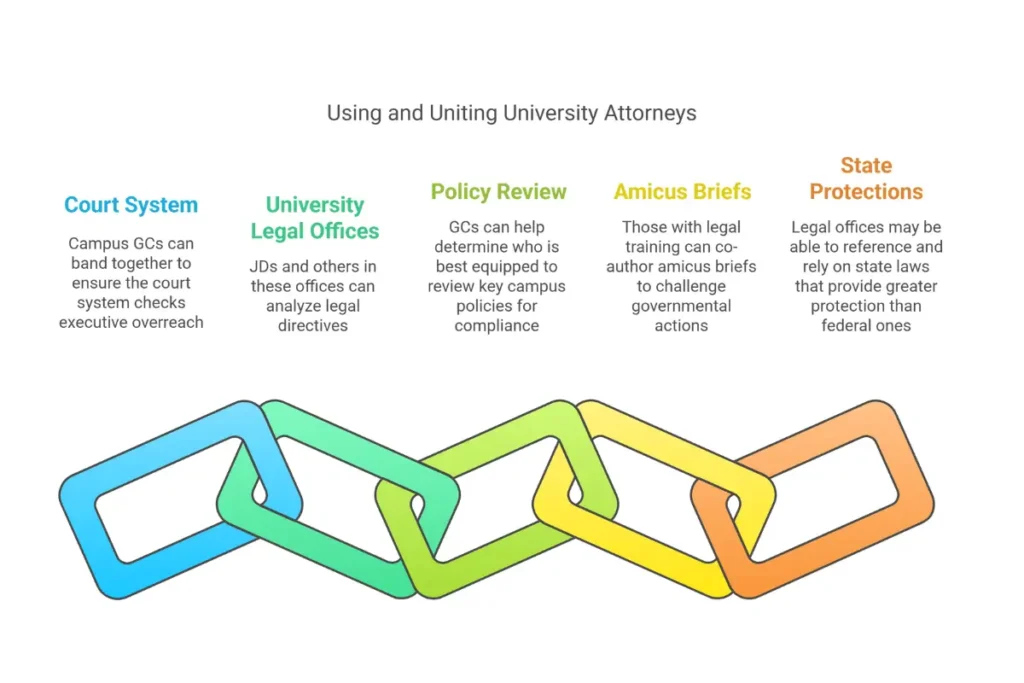
Why It Works: The courts can check executive overreach. Compared to small private colleges, university systems and academic consortia typically have well-staffed offices of general counsel. Such offices are equipped to address legally suspect directives coming from the federal administration right now.
Actionable Tactics:
Bring together General Counsel attorneys from multiple institutions to review policy proposals, Dear Colleague Letters, etc. for constitutional or statutory infirmities.
Ask the General Counsel cadre if it makes sense for them to file amicus briefs in key lawsuits concerning First Amendment, Title IX, or rule‐making processes.
Assert, when appropriate, state‐level protections—some states have stronger academic‐freedom statutes than those associated with federal guidelines.
10. Don’t Just “Poke the Bear” and Run— Join Forces in Taking Strategic, Sequential, and Ongoing Steps
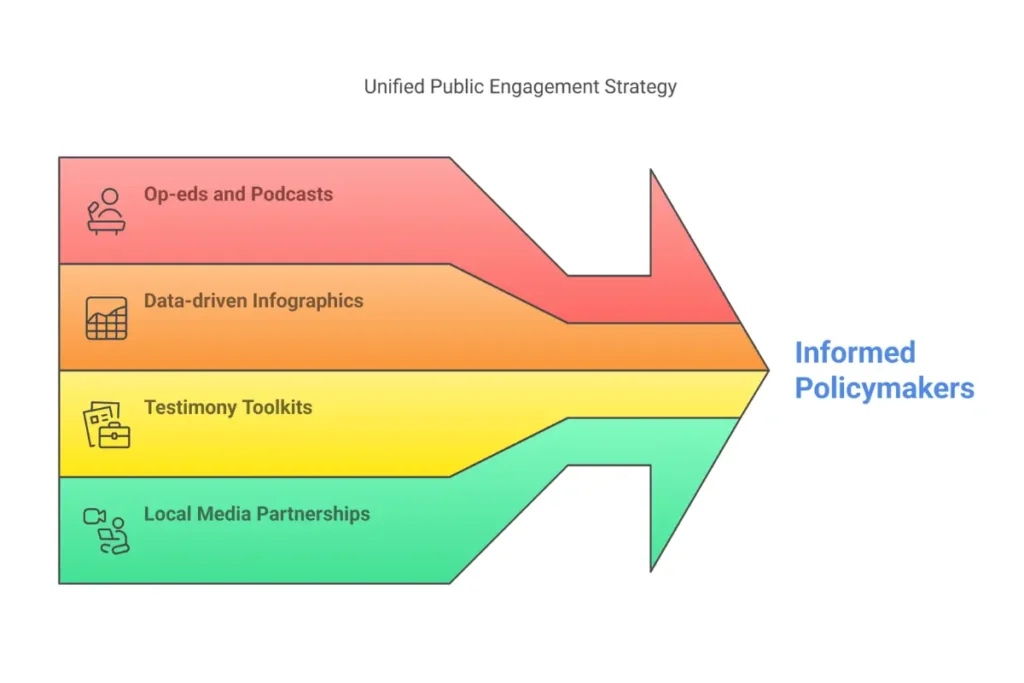
Why It Works: Thoughtful, sequential, and multifaceted public engagement can shift narratives and inform policymakers.
Actionable Tactics:
Coordinate a series of op‐eds, podcasts, and data‐driven infographics that highlight the challenges and opportunities that American higher education is facing.
Create testimony toolkits for leaders speaking before legislative bodies.
Partner with local media to showcase student success and community impact.
These ten strategies are not prescriptions; they’re invitations to collectively chart and clear the path that higher education leaders should pave right now. The paving will be accelerated by the hearts, heads, and hands of leaders working together.
Let’s not only meet this moment but help define it.
What are the main challenges facing higher education today?
According to insights shared by Lori E. Varlotta, today’s colleges and universities are grappling with several critical issues. Key ones include the following: a decline in public trust, the increasing politicization of both the curricula and co-curricula, and an unsustainable funding model. To successfully address these challenges, Varlotta shares strategies that help academic leaders model the fundamental aim of education: a calling in (not a calling out) in the rigorous pursuit of truth.
What does it mean to “Lead with Inquiry, Not Ideology”?
Institutions that lead with inquiry are incubators for open dialogue and critical thinking. Conversely, institutions driven by a set ideology are prone to curtail (consciously or unconsciously) the exchange of diverse ideas and genuine inquiry. Ideology-based environments make it difficult for members of the community to ask necessary but uncomfortable questions and to challenge ideas without censorship. In academe, curiosity should be valued over conformity.
How can higher education institutions rebuild trust?
A key element in rebuilding trust, as highlighted by the Lori Varlotta, is through evidence-based discourse. In an era of “Truth Decay” (as coined by RAND), universities must actively teach students to discern data from opinion, vet sources, recognize propaganda, and think critically. Such teaching not only strengthens academic rigor but also develops the types of skills that foster informed civic and democratic participation.
Why is understanding important in a polarized environment?
The U.S. has become increasingly polarized over the last decade. If classmates, neighbors, citizens, and co-workers want to have functional relationships with each other, we must seek to understand rather than aim to persuade. According to Varlotta, the basis of such relationships includes empathetic listening and a demonstration of openness. Understanding doesn’t necessitate agreement. It does, however, lay the foundation for the types of constructive engagement that are essential to democratic institutions and societies.
How can universities cultivate civic engagement in their students?
Beyond theoretical learning, Lori suggests that democracy should be practiced, not just taught. This involves embedding into the curriculum experiential learning opportunities such as community-based research and service-learning projects. These hands-on experiences allow students to actively participate in civic life, becoming theoretically- and practically-informed citizens who advocate, organize, and lead, not just vote.
What is the significance of empowering grassroots leaders within an institution?
Authentic change often originates from those directly involved with the issues. Universities that aim to facilitate social change should support students, faculty, and staff who conduct rigorous research in areas that connect personal interest to a campus or community need. Empowering grassroots leaders, who “do the homework,” is one way to bolster individual agency and develop policies, practices, and norms that improve the institution’s and the larger community’s wellbeing.
How can institutions address challenges related to bureaucracy and funding?
Lori Varlotta advocates for streamlining decision-making processes to foster innovation. She suggests that practical solutions like rapid-response teams and Values Impact Assessments (VIAs) can enable universities to make nimble and principled decisions. Regarding funding, sustainable universities must look beyond traditional sources like tuition revenue to support their mission. Today’s universities must diversify funding through philanthropic partnerships, industry collaborations, and long-term grants.
What is the importance of strategic alliances and legal action for higher education?
While competition has historically been the norm, Varlotta explains why collaboration is key to industry reform. Forging strategic alliances with other institutions, through joint statements or shared advocacy, strengthens the collective voice of higher education. Furthermore, in an environment where academic freedom is under threat, Varlotta encourages academic leaders to pull legal levers: file amicus briefs and assert state-level protections in the defense of core academic principles.
To address the urgent challenges of our times—climate change, humanitarian crises, political polarization, democratic diminishment, and global disruption—the primary aim of American higher education must go far beyond career preparation. To meet this moment, educators must use the curriculum, the campus, and their community relationships as a crucible for preparing engaged, informed citizens to contribute to a representative democracy. This aim is especially vital for adult learners since these students are prone to integrate personal, professional, and vocational experiences into their educational pursuits.
Beyond the Lecture Hall: Why Experience Matters
Classroom instruction, while foundational, cannot solely foster democratic competencies. Democracy, after all, must be practiced—not just studied. Experiential pedagogies, such as service-learning and community-based research, foster such practice. They immerse students in real-world environments that require them to work collaboratively (not hierarchically) with local community members and neighbors to explore and, ideally, mitigate real-life problems. Such mitigation is not an academic or theoretical endeavor; it’s a concrete one that sharpens critical thinking and encourages civic engagement in real-time and long after the activity concludes.
Why Adult Learners Thrive in Experiential Learning
Drawing upon the philosophies of John Dewey, a pioneer of progressive education, we recognize that adult graduate students are exceptionally suited to translate academic theory into lived practice. With years of finessing workplace dynamics; navigating complex health systems in the provision of child and parent care; and participating in community groups, HOAs, church and temple councils, adult learners have had practice living, working, and leading many of the institutions that are part of our democratic country. Often, these individuals do not simply absorb knowledge; they actively reshape it through reflection and engagement.
Service-Learning: Building Relationships, Not Performing Charity
In my professional journey, I’ve consistently advocated for service-learning that centers on mutual respect and shared goals. When integrated into academic instruction with structured reflection, service-learning becomes a reciprocal partnership—not an act of charity. It allows students and community members to co-create solutions to community-identified needs.
Service-learning helps students investigate the root causes of societal challenges—the foundational issues that make the service necessary in the first instance. Importantly, it also reveals the messy, long, and non-linear nature of societal change. Graduate students, armed with analytical tools, applied methodologies, and enriched by life experience, are well-equipped to face these complex realities with resilience and enthusiasm.
Community-Based Research: Humanizing Knowledge Production
Community-based research (CBR) typically augments the time spent with books, laboratories, and case studies with time spent in community collaboration. CBR democratizes the production of knowledge, acknowledging that insights from lived experiences can be as valuable as academic theory when confronting real-world issues in real-time. For adult learners, CBR reinforces agency, cultivates humility, and prompts a vital realization: theories that look elegant on paper can unravel in practice.
CBR nurtures empathy and deepens understanding of the intricate social, political, and cultural structures that influence communities. It reminds us that lasting solutions are rarely declarations or prescriptions from above. They are co-created through messy, iterative processes that depend on collaboration and deep listening.
Educating for the Common Good(s): The Role of Graduate Programs
When graduate programs incorporate experiential learning, service-learning, and community-based research, they cultivate lifelong learners who are not only professionally capable but also civically committed. These learners emerge as reflective practitioners prepared to think about, talk about, and enact a more equitable, inclusive, and democratic society.
Final Thought: Democracy Lived, Not Lectured
Democracy can be taught, but not lived in concrete classrooms, synchronous seminars, and asynchronous arrangements. To “do” democracy students must live it, model it, succeed within it and fail from it. To prepare this country and the world for the next generation of leaders, academic programs must give adult students the opportunities to “do” democracy. Chances are, they will be able to “do it” as well or better than the leaders of this generation.