How Universities Achieve Financial Sustainability Through Collaboration
Across higher education, leaders are rethinking how to strengthen mission-driven, tuition-dependent institutions in the face of demographic decline, cost escalation, and market volatility. The old playbook—incremental tuition hikes and deeper discounts—no longer delivers stability. Financial sustainability now depends on innovation, collaboration, and scale.
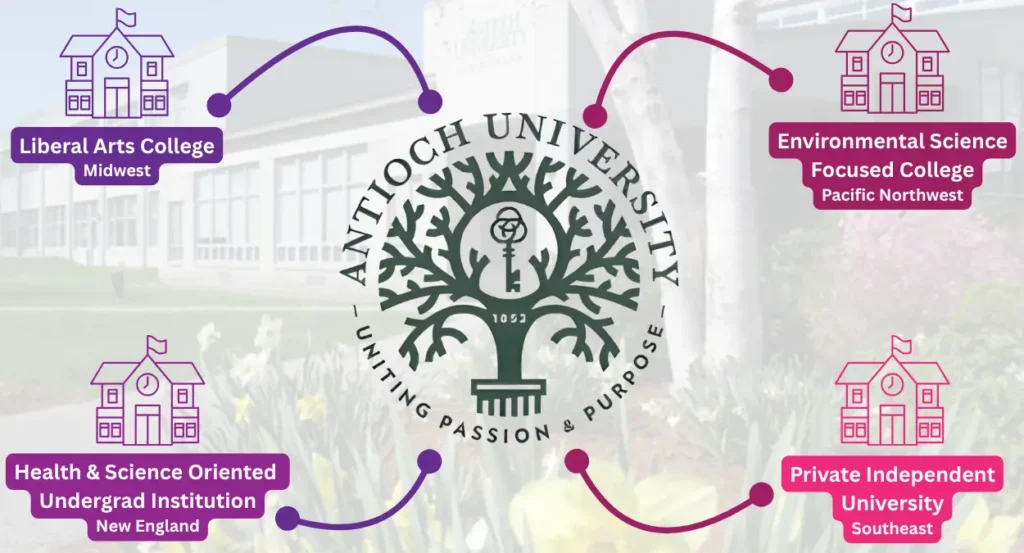
The Coalition for the Common Good (CCG)—founded in 2023 by Antioch University and Otterbein University—offers a practical model. Rather than merging, its members join a federation that allows each university to retain its own board, accreditation, and identity while sharing academic pathways and operational systems. The result is a coalition that lowers costs, expands opportunity, and preserves independent board governance while creating interdependent degree pathways.
This collaborative approach is grounded in progressive education principles and democratic values. Learn how experiential education shapes innovative higher education models.
Shared Services Organization (SSO): Driving Innovation in Higher Education
Presidents and boards increasingly recognize that sustainability cannot rest on cost containment alone. The CCG’s Shared Services Organization (SSO) aims to show how business innovation in higher education can generate both efficiency and quality. By coordinating information technology, legal services, payroll, and other administrative systems, member institutions access enterprise-level tools that could be cost-prohibitive to sustain individually.
This shared-services framework helps redirect institutional resources toward what matters most at small independent colleges and universities: teaching, campus and community service, and the student experience. It transforms collaboration from a gesture of goodwill into a disciplined strategy for operational strength.
Value-Based Student Recruitment: Beyond Traditional “Discounting”
Long-term financial sustainability depends on thoughtful, value-based student recruitment. Through the CCG, undergraduate students at member colleges can earn multiple degrees all with a purpose. Students are able to travel affordable, accelerated pathways to Antioch’s justice- and leadership-focused graduate and professional degrees. Named Graduate Early Admissions Pathways (GEAPs) on one campus, these pathways create a seamless route from bachelor’s to master’s, reducing both time and cost to degree.
Value-Based Student Recruitment: Beyond Traditional “Discounting”
Long-term financial sustainability depends on thoughtful, value-based student recruitment. Through the Coalition for the Common Good, undergraduate students at member colleges can earn multiple degrees all with a purpose. Students are able to travel affordable, accelerated pathways to Antioch’s justice- and leadership-focused graduate and professional degrees. Named Graduate Early Admissions Pathways (GEAPs) on one campus, these pathways create a seamless route from bachelor’s to master’s, reducing both time and cost to degree.
Early outcomes are promising. Otterbein University, one of the founding partners, saw a 23 percent increase in new-student enrollment within two years of joining the CCG—growth driven not by deeper discounting but by greater value and visibility. See GEAP webpage for additional information
GEAPs exemplify experiential learning in action, connecting undergraduate and graduate education in meaningful ways.
Explore how experiential adult education drives student success
Aligning Purpose, Scale, and Student Success
The CCG advances student success by connecting learners to a broader academic and professional ecosystem. Cross-registration among member universities will allow students to take select online or hybrid courses taught by faculty across the network. Shared internship and employer partnerships will expand access to purposeful work. And because all programs operate under Antioch’s Higher Learning Commission accreditation, students gain both quality assurance and federal-aid eligibility.
A Model Worth Watching
The CCG offers an emerging model for small and mid-sized universities that want to double down on delivering mission- and student-centric opportunities while staying independent and becoming financially strong. It presents a new way of thinking about collaboration—one that goes far beyond back-office shared services while steering clear of the mergers and acquisitions that have become increasingly common across higher education.
See these short essays more details https://commonthread.antioch.edu/describing-the-ccg-in-four-short-essays/
Frequently Asked Questions
Q: What is the Coalition for the Common Good?
A: The Coalition for the Common Good is an innovative higher education system founded in 2023 by Antioch University and Otterbein University.
Q: How do Graduate Early Admission Pathways (GEAPs) work?
A: As imagined, GEAPs will allow undergraduate students to take graduate courses during their senior undergraduate year, earning credit toward both the bachelor’s and the master’s degrees. The model is being designed to reduce both the time to graduation and the cost of these two degrees.
Q: What services does the Shared Services Organization provide?
A: The SSO is being constructed to coordinate IT, legal services, payroll, and other administrative systems across member institutions.